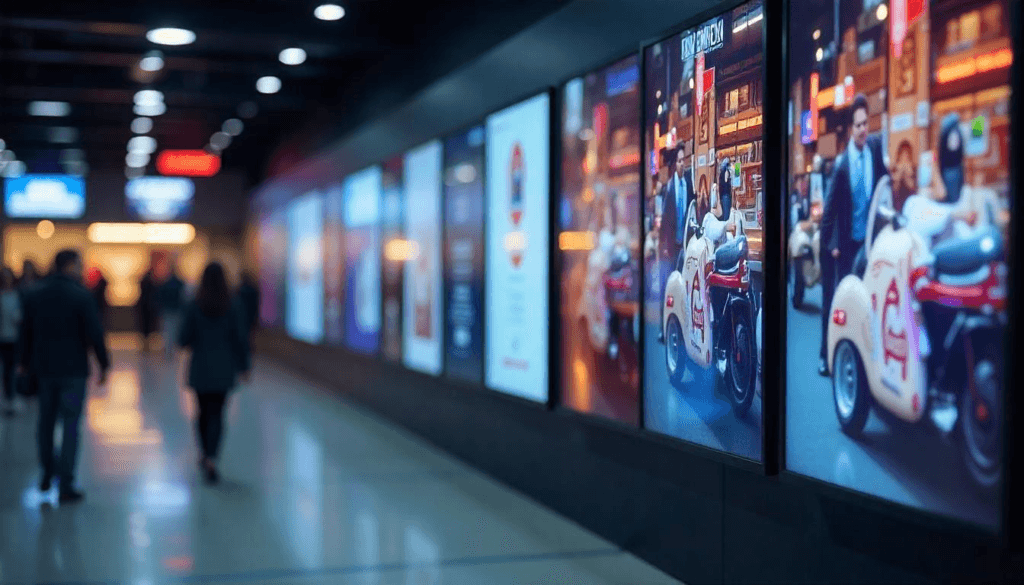

Digital Wayfinding and Information Screens at Public Transportation Terminals
We explain the key points to consider when installing passenger information and wayfinding displays at public transportation hubs, such as bus and train terminals.
Why Does Information Flow at Transportation Hubs Require a Different Approach?
At public transportation terminals such as bus stations and train stations, the purpose of the display is clear: to provide passengers with the right information at the right time. Aesthetics take a back seat here; readability and timeliness are the top priorities. Information about schedule changes, platform updates, or delays must reach thousands of passengers within minutes—which requires a different approach to planning on both the hardware and software sides.
Readability from a Distance
Terminal displays typically need to be readable from various points within large waiting areas, sometimes from dozens of meters away. This requires the screen size and font type/size to be designed very differently from a standard office display; content designed with a small font size may be completely unreadable from the back of the hall.
Real-Time Data Integration
The true value of modern passenger information displays lies in their ability to integrate in real time with the trip management system. Instead of manually entering departure times into each screen individually, they can be automatically retrieved from a central schedule database and displayed simultaneously on all screens. Without this integration, the system risks becoming a static display prone to delays in updates.
24/7 Operation and Environmental Resistance
Since terminals operate around the clock, the screens must function without interruption. Additionally, for screens installed in open platform areas, selecting hardware with an appropriate protection rating against dust, humidity, and temperature fluctuations becomes even more critical than in enclosed waiting areas.
Emergency and Priority Announcement Scenarios
In public transportation terminals, the system must be prepared not only for daily schedule information but also for priority scenarios such as emergency evacuations or security announcements. In this scenario, the ability to immediately pause the normal content stream on the screens and display a priority message is a requirement that must be specifically planned during the installation phase.
Multi-Point Management
In a large terminal, dozens of screens may be distributed across different waiting areas, platforms, and entry points. The ability to monitor and update all of these from a single central management panel is a critical requirement for both operational efficiency and fault detection. We examined the bidding and specifications aspects of similarly scaled installations in public institutions in our article on LED screens for public institutions.
Passenger Information System for Your Terminal
In terminal projects, the decisive factor is not the number of screens, but where the schedule data will come from. If your existing schedule management system can export data, the installation becomes much simpler; if not, the focus shifts to integration. We can assess your infrastructure and clarify which scenario applies to you. Explore our digital signage solutions or share your system infrastructure with us.