
Window and Promotional LED Screens in Retail Store Chains
We explain what to consider regarding content management, placement, and multi-location synchronization for storefront displays and promotional screens in multi-store retail chains.
In a Retail Chain, a Screen Is More Than Just a Single Display
In a single-location store, the decision regarding displays is simple: one screen, one piece of content. In a retail chain with dozens of locations, however, the real challenge isn’t choosing the hardware—it’s being able to roll out the same campaign across all locations on the same day, with the same look and feel. We’ve already covered the design and aesthetic aspects within a single store in our article on digital signage in showrooms and stores; here, the focus is on the different problem that arises as the number of locations increases: scale.
Storefront Display: Readability from the Outside
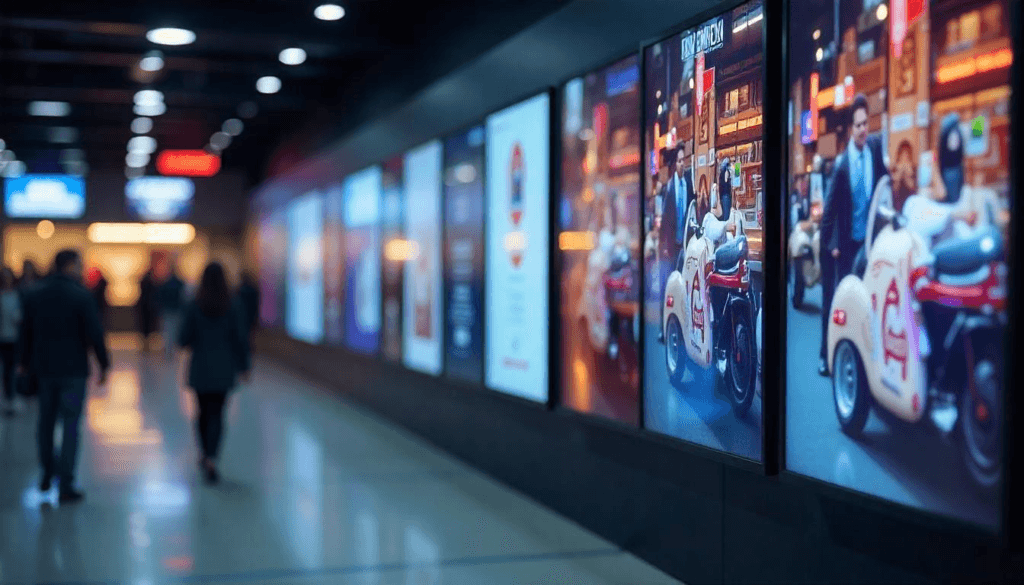
A screen installed in a street-facing window must be readable in daylight and from a certain distance. An indoor-type standard panel placed behind a storefront window appears washed out in daylight; window applications require panels with high brightness levels. Glass reflections also directly affect content design: large font sizes and high contrast are preferred over fine text and low-contrast visuals in storefront displays. At a chain-wide scale, this means that individual branches do not create their own designs; instead, a template provided by headquarters is adapted to the specific conditions of each storefront.
Storefronts Are Not the Same Everywhere
Here’s a point often overlooked in chain stores: the same brand, the same display model, but branch facades differ from one another. A north-facing storefront and a south-facing one receive completely different light throughout the day; a branch inside a shopping mall does not have the same brightness requirements as a street-level store. For this reason, in chain store projects, rather than making bulk purchases based on a single brightness value, it yields better results to divide branches into several groups based on facade orientation and location, and to determine the appropriate panel class for each group. We’ve also examined the placement requirements for mall-based locations in our article on shopping malls.
Simultaneous Content Management Across Multiple Locations
The chain’s most critical need is for the central marketing team to be able to broadcast the same campaign to all branches simultaneously from a single point. Without a centralized content management system, each branch would have to manually update its own screens; this is both a waste of time and a risk of brand inconsistency. In a well-designed system, content is prepared once, distributed on a scheduled basis, and automatically removed at the end of the campaign. While the automatic detection of a campaign’s end date may seem like a minor detail, the presence of expired campaigns in store windows is one of the most common complaints in retail chains.
Regional and Local Content Flexibility
While centralized management is essential, some campaigns require regional differentiation: local events, branch-specific inventory status, or regional price differences. A properly designed system can define content areas specific to certain branches while maintaining overall brand consistency. The model that works in practice is to keep the majority of the screen under central control while leaving a small portion to the discretion of the branch or regional manager; opening up the entire screen to the branch quickly undermines brand consistency.
Standardization of Hardware at the Branch Level
Using different brands or models of screens at each branch complicates maintenance and spare parts management. In chain projects, configuring hardware using a few standard models reduces both purchase costs and downtime. It also offers benefits for new branch openings: if there is a standard hardware list, opening preparations do not have to be planned from scratch each time. The key question in the long term is how many years the selected model will remain available; a short-lived model will create a standardization issue again in a branch opened three years later.
A Display System Suitable for Your Retail Chain
The most effective starting point for chain projects is to group branches by facade orientation and location type, and to decide upfront where content authority will be divided between headquarters and the branch. If you share your number of branches and your current content management practices, we can determine the appropriate hardware-software combination. Explore our digital signage solutions or tell us about your branch structure.