The Visual Technology of the Future: A Guide to Professional LED Display Solutions
Everything you need to know about indoor and outdoor LED display solutions, pixel pitch selection, and industrial LED display panel technologies.
Professional LED Display Technologies and Industrial Applications
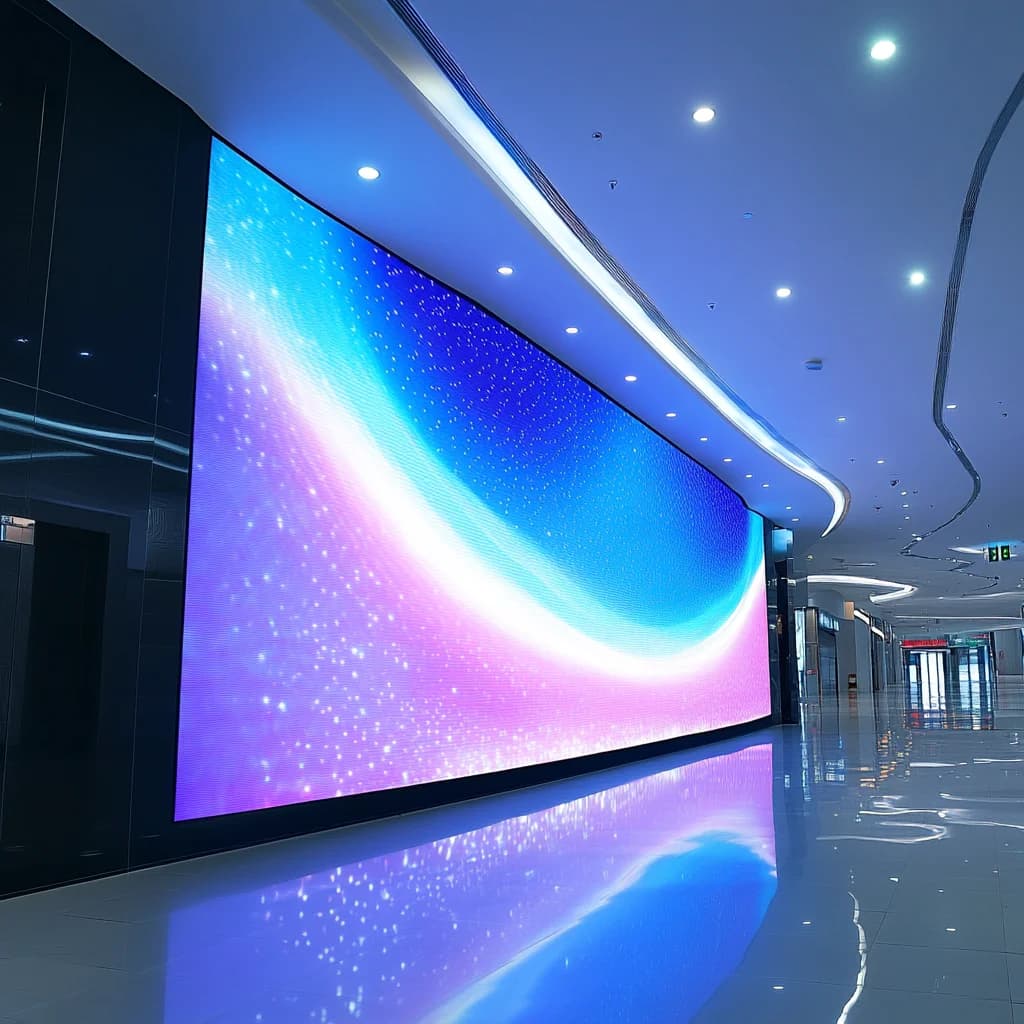
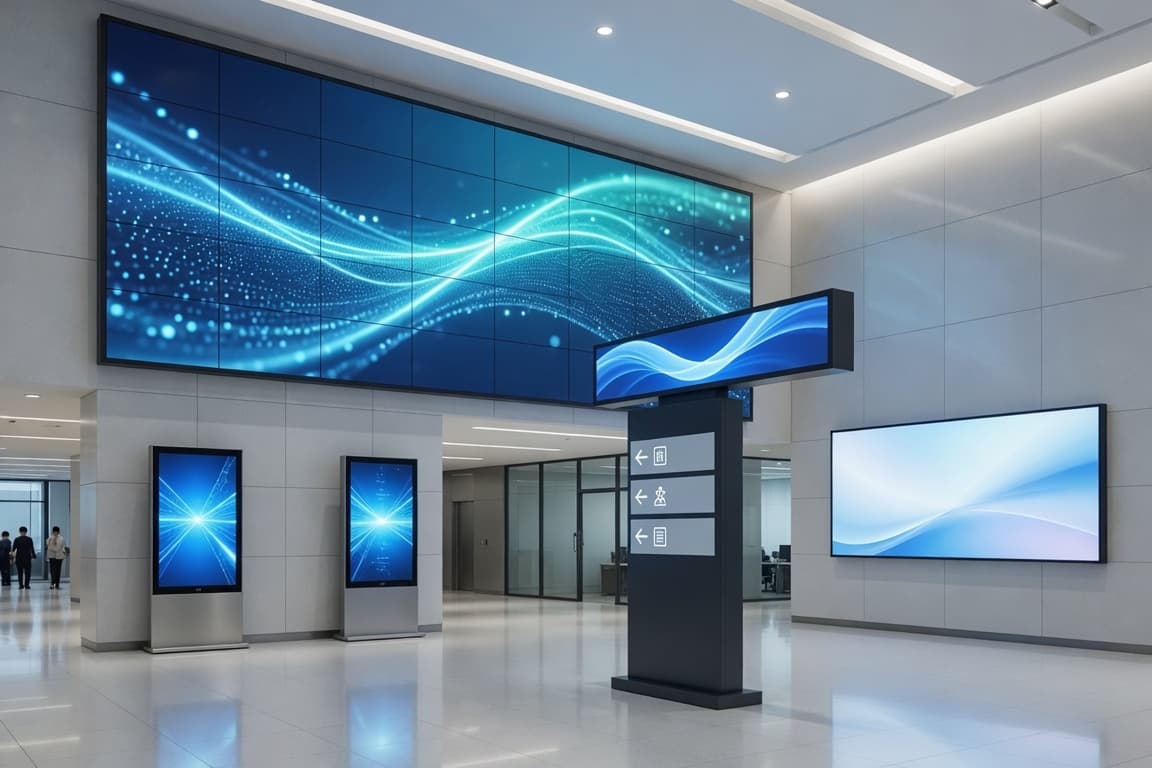
LED displays, one of the most powerful, dynamic, and eye-catching elements of visual communication, are used today across a wide range of applications—from digital out-of-home (DOOH) advertising to smart city wayfinding systems, corporate lobby areas, airport information boards, and control rooms. Professional display systems—which completely eliminate the lamp life limitations of traditional projection systems, the bezel lines (bezels) and brightness limitations of LCD screens, and—thanks to their modular panel architecture—offer visual displays of unlimited size, in any desired geometric shape (curved, cylindrical, corner-rounded), and completely seamless (bezel-free).
Critical Technical Details and Selection Criteria for LED Screen Projects
The technical success, sustainability, and return on investment (ROI) of an LED screen project depend on selecting the engineering parameters best suited to the physical conditions of the space, the viewing angle, and the viewing distance. The following key concepts must be thoroughly examined during the corporate procurement and technical specification preparation phases:
1. Pixel Pitch and the Formula for Calculating the Optimal Viewing Distance
Pixel pitch (P value) refers to the distance in millimeters between the center points of two adjacent LED chips (e.g., P1.2, P1.5, P1.86, P2.5, P3, P4, P5, P10). As the pixel pitch decreases, the total pixel density (resolution) on the screen increases, and consequently, the minimum viewing distance decreases. The formulas for calculating the optimal viewing distance, which are accepted as industry standards, are as follows:
- Minimum Viewing Distance (meters) = Pixel Pitch (mm) × 1.0 (For example, a P2.5 screen can be viewed most clearly and without distinguishing individual pixels from a minimum distance of 2.5 meters.)
- Maximum Comfortable Viewing Distance (meters) = Pixel Pitch (mm) × 3.5
In indoor boardrooms, crisis management centers, and control rooms, lower pixel pitches (Fine Pitch: P0.9 – P1.5) are preferred to prevent users from seeing individual pixels even when viewing the screen up close. While P2.5 or P3 panels are installed in store windows and lobbies, cost-performance-focused P4, P5, P6, or P10 panels are typically preferred for outdoor building facades, where the viewing distance is generally over 10 meters.
2. Next-Generation LED Panel Architectures: Differences Between SMD, COB, GOB, and Mini-LED
The most fundamental factors determining display quality, durability, and black balance are panel coating and arrangement technologies:
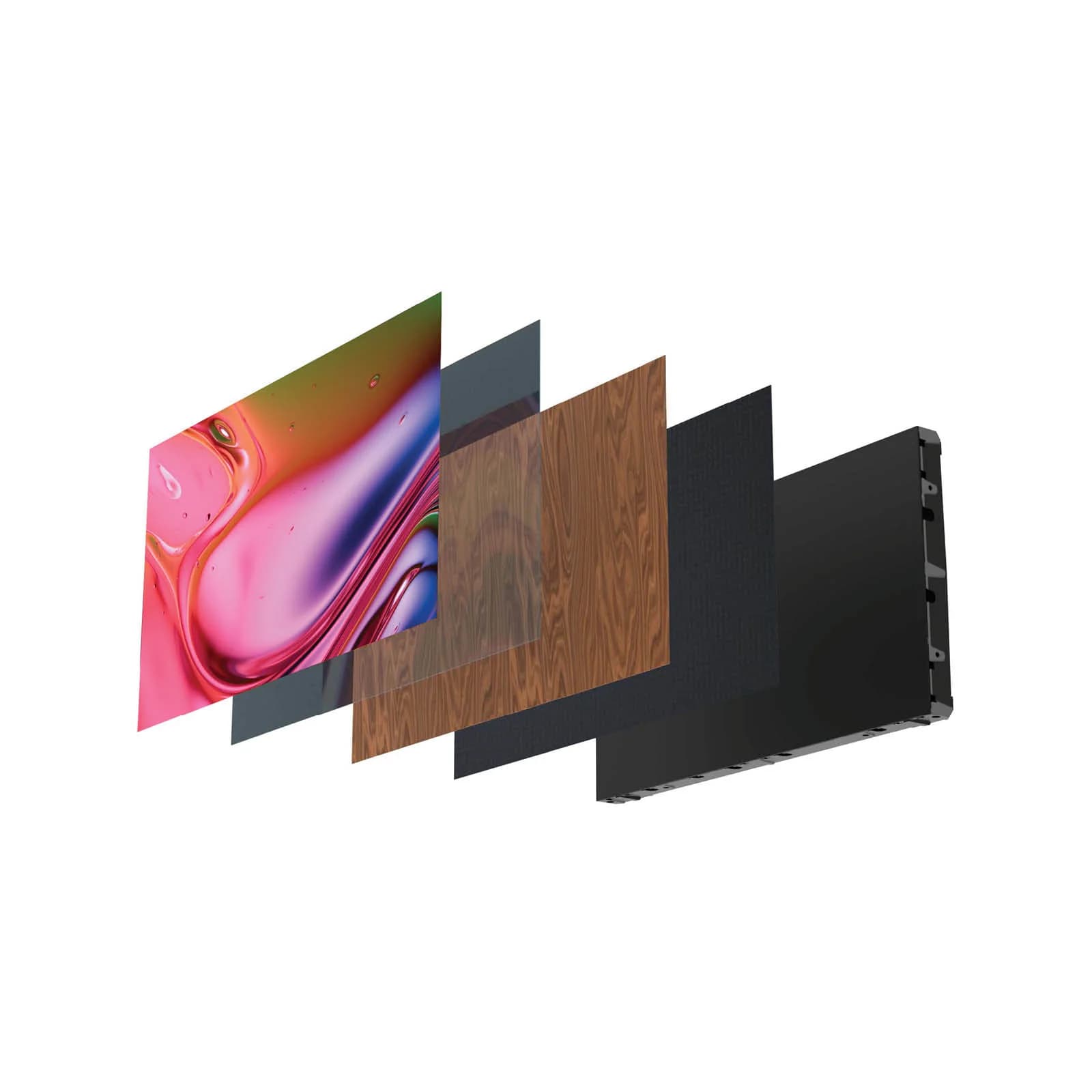
- SMD (Surface Mounted Diode): This is the industry’s traditional and most widely used technology. It consists of red, green, and blue LED chips combined into a single package (diode) and soldered onto the PCB surface. It offers a wide viewing angle of 140 to 160 degrees and high color accuracy. However, it is sensitive to physical impacts and moisture.
- COB (Chip on Board): This is a new-generation premium technology in which LED chips are mounted directly onto the printed circuit board (PCB) without a protective plastic package and then coated with a special epoxy resin. It provides flawless black balance at very small pixel pitches (below P1.0), ultra-high contrast (10,000:1), and high energy efficiency. It reduces the dead pixel (pixel burnout) rate to nearly zero, and since the surface is completely flat, it can be easily wiped clean.
- GOB (Glue on Board): A hybrid technology produced by completely coating the surface of standard SMD panels with a special transparent protective layer (gel/epoxy). It provides 100% protection for the screen against impacts, moisture, water, dust, and static electricity (ESD). It serves as an excellent protective shield, particularly for school hallways, showrooms, airports, and areas where there is a risk of physical contact with the screen by children or crowds.
- Mini-LED and Micro-LED: Recognized as the display technology of the future, these systems use micron-sized LED chips to deliver brightness on par with OLED displays, with HDR10+ standards and billions of colors. They are typically preferred in luxury retail and high-end corporate presentation rooms.
3. Selecting Refresh Rate and Scan Mode
For displays intended for use in television studios, hybrid meeting rooms, stage shows, or smart in-store concepts, a refresh rate of at least 3840 Hz or higher (the number of times the screen is scanned per millisecond). Screens with low refresh rates (e.g., 1920 Hz) may appear normal to the naked eye, but when captured by a smartphone camera or professional broadcast cameras, they produce black flickering, vertical scan lines, moiré patterns, and tremors on the screen. The scan mode (e.g., 1/16, 1/32) determines how the driver integrated circuits (ICs) distribute screen brightness and data flow; lower scan rates provide higher stability and brightness performance because they supply power to each pixel for a longer duration.
4. Brightness (Nits/Candela) and Contrast Balance
The light intensity of the area where the display will be installed directly determines the brightness selection. An incorrect brightness selection can make the display unreadable or cause excessive eye strain:
- Standard Indoor: 600–1,200 nits (Eye-friendly, fanless, and silent designs)
- Store Windows (Window-Facing / High Brightness): 2,500–4,500 nits (Powerful enough to compete with direct sunlight from outside)
- Outdoor: 5,500–8,500 nits (Armored panels that retain their vibrancy even under direct sunlight)
Architectural Differences Between Indoor and Outdoor LED Screens
The most critical factor in outdoor LED screen projects is a high protection rating that withstands harsh weather conditions, extreme heat, freezing temperatures, storms, and heavy rain. According to international standards, outdoor projects require an IP65 rating for the front surface, at least an IP54 rating for the rear surface, or a complete IP66 rating. For indoor projects, however, an IP30 rating is sufficient due to the lower humidity levels. While industrial air conditioning or smart fan systems are used to dissipate heat in outdoor displays, fanless die-cast aluminum cabinet designs are preferred for indoor applications to ensure a quiet operating environment.
Cabinet Architecture: Rental and Fixed Installation Systems
Rental (rental) LED screens consist of aluminum enclosures that feature a fast-lock interlocking mechanism, are lightweight, portable, and designed to fit into flight cases, allowing for quick assembly and disassembly. For permanent installations such as storefronts, corporate lobbies, control rooms, and building facades, fixed LED panels that are directly integrated into the architectural structure are used. In fixed installations, modules featuring front-access design allow for the module to be removed and replaced from the front in a matter of seconds using a special magnetic vacuum tool—without the need to access the heavy mechanical structures behind the screen in the event of a technical malfunction.
LED Screen Control and Signal Management Infrastructure
The efficient operation of an LED screen is made possible by the control cards (Sending Card & Receiving Card) and video processors (Video Processor) located behind the screen. The system is divided into two main operating modes:
- Synchronous Control System: The display is connected live to a computer or media server. The image on the computer screen is scaled via the video processor and transmitted to the LED display in real time. This is essential for concerts, studios, and live broadcasts.
- Asynchronous Control System: Content is uploaded once to the screen’s built-in industrial memory card (Android-based player or standalone controller) via a network (Wi-Fi/4G/LAN). The screen plays the content in a loop on its own, without requiring an external computer. It is ideal for roadside billboards, store totems, and information kiosks.
Technical Engineering: Static Load and Power Infrastructure Calculations
In large-scale outdoor or indoor video wall projects, static load calculations are of critical importance. Before steel construction begins, engineers must calculate the building’s load-bearing capacity and the outdoor wind load. On the power side, maximum power consumption refers to the moment when the screen is completely white (100% RGB). During daily use (while playing normal video and graphics), screens operate at an average power consumption level (approximately 200–300 W/m²). Driver boards featuring next-generation common cathode technology automatically adjust brightness based on ambient light sensors, providing energy and cost savings of up to 30% compared to traditional common anode systems.
Power Supply and Signal Redundancy
In professional projects, dual power supplies and dual signal line redundancy are implemented to prevent the system from failing during a live broadcast or a critical presentation. If the primary power supply or main signal cable sustains physical damage, the backup line automatically kicks in within microseconds (without participants noticing). This infrastructure is an indispensable engineering standard for control centers and live broadcast studios that cannot tolerate the risk of data loss.
Frequently Asked Questions About LED Display Solutions
Below, we have compiled the technical questions most frequently asked by our corporate clients, architects, and IT managers during the project planning phase, along with professional answers:
- What is the lifespan of LED displays, and do they lose brightness over time? Professional LED panels manufactured with industrial-grade components have an average lifespan of 100,000 hours (approximately 11 years of continuous operation) when used correctly, maintained regularly, and kept under ideal temperature conditions. The brightness of LED chips may decrease by half (half-life) over time (typically after 50,000 hours), but this can be optimized through hardware calibration settings.
- What is the difference between an LED screen and an industrial LCD screen (Video Wall)? No matter how thin they are, LCD screens always have a bezel—a seam—between them. LED screens, on the other hand, are completely bezel-free and provide a seamless, single-piece image of unlimited size. Additionally, the brightness levels of LED screens are at least 3–4 times higher than those of LCD screens, making LED screens the only viable option in areas exposed to daylight.
- If a malfunction occurs, does the entire screen need to be replaced? Absolutely not. LED screens have a modular design. For example, on a 10-square-meter screen, if only a few LED chips fail, only that small faulty module (approximately 32x16 cm in size) is removed from the front using a vacuum, and a spare module is installed in its place. The rest of the screen continues to operate without interruption. The faulty module is then repaired by soldering under a microscope in the technical service laboratory.
- Can a screen designed for indoor use be used outdoors? Absolutely not. The hardware structure of indoor panels is not sealed against moisture, water, or dust (IP30 rating). Additionally, since the brightness levels are too low to compete with daylight and sun glare in outdoor environments, the image will remain completely dark. For outdoor projects, weather-resistant special enclosures and high-nit LED displays must be used.
- What is Color and White Balance Calibration (Chroma Calibration)? Over time, slight color shifts may occur among aging LED diodes. Using professional spectrometer cameras, the wavelength and brightness of each pixel on the screen’s surface are measured. Through software, current is evenly distributed across the entire wall, restoring the screen to the uniform white and color balance it had on the day it was first purchased.
Engineering Marvel LED Screen Projects at Koz Teknoloji
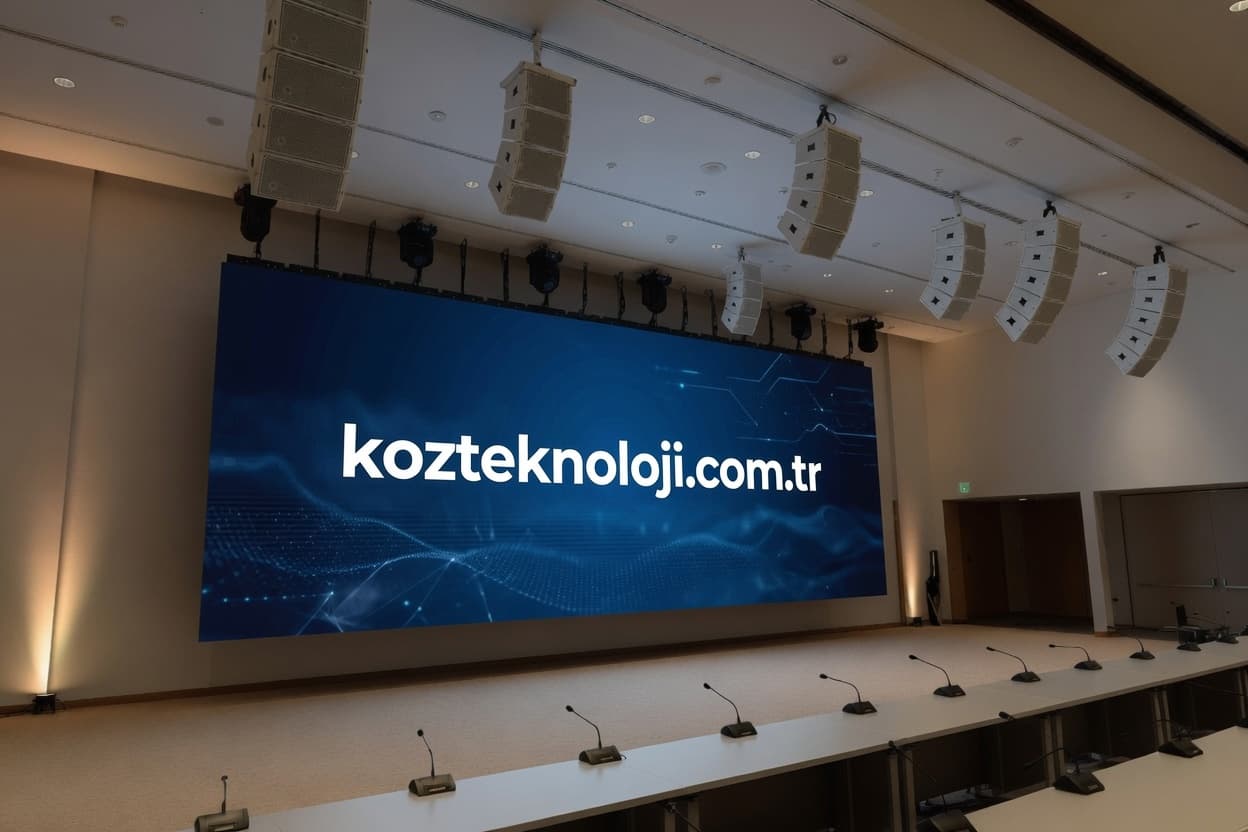
As Koz Teknoloji, with deep industry experience in corporate AV and professional display systems, we offer end-to-end, turnkey engineering services ranging from outdoor LED totems to complex building facade installations (Mesh LED), and from slim-bezel indoor lobby screens to stage, conference, and studio production solutions. With our team of technical experts, we ensure a seamless digital transformation for your business through free on-site surveys, accurate pixel pitch analysis, static load calculations, steel structure fabrication, and a guaranteed 24/7 uninterrupted post-sales technical support service. To explore our LED display solutions—which add value to your organization, meet international standards, are budget-friendly, and built to last—prepare technical specifications, and receive a customized quote for your project, contact our team of expert engineers today.