What Are the Factors That Affect LED Screen Prices?
We explain the factors that determine the cost of an LED display—display size, pixel pitch, panel technology, installation, and software licensing—based on our real-world project experience.
Why Isn’t There a Single “LED Screen Price”?
One of the first questions we get is almost always the same: “How much does an LED screen cost per square meter?” The honest answer is that this cannot be answered with a single figure. Two LED screens of the same size can have cost differences of over 50 percent due to different pixel pitches, different panel technologies, different installation conditions, and different software requirements. In this article, instead of searching the internet for a single price figure, we’ll break down the components that make up that price—so you’ll know exactly what you’re paying for when you receive a quote.
Screen Size and Square Meter Calculation
The number of modules accounts for the largest portion of the cost; this is directly proportional to the screen’s total square meters. However, there’s one point that’s often overlooked: LED screens are manufactured in standard panel/cabin sizes (typically 500x500 mm or 500x1000 mm). If the dimensions you need aren’t exact multiples of these standard sizes, either a cutting/custom production cost is added, or the screen size is rounded to the nearest standard dimension. Clarifying the screen area with architectural drawings before starting the project is the most practical way to avoid revision costs later on.
Pixel Pitch: The Balance Between Image Quality and Budget
We covered the topic of pixel pitch in detail in our LED Screen Selection Guide; here, we’ll just touch on its impact on price: When you go from P2 to P4, the number of LED chips per module drops to about one-fourth, which significantly reduces the cost. The problem is that many projects select an unnecessarily fine pixel pitch based on the assumption that “the highest resolution is best” without calculating the actual viewing distance, leading to an unnecessary increase in the budget. Choosing P2 for a shopping mall facade to be viewed from 8 meters away will cost you both money and ease of maintenance.
SMD and COB: How Does Panel Technology Affect Price?
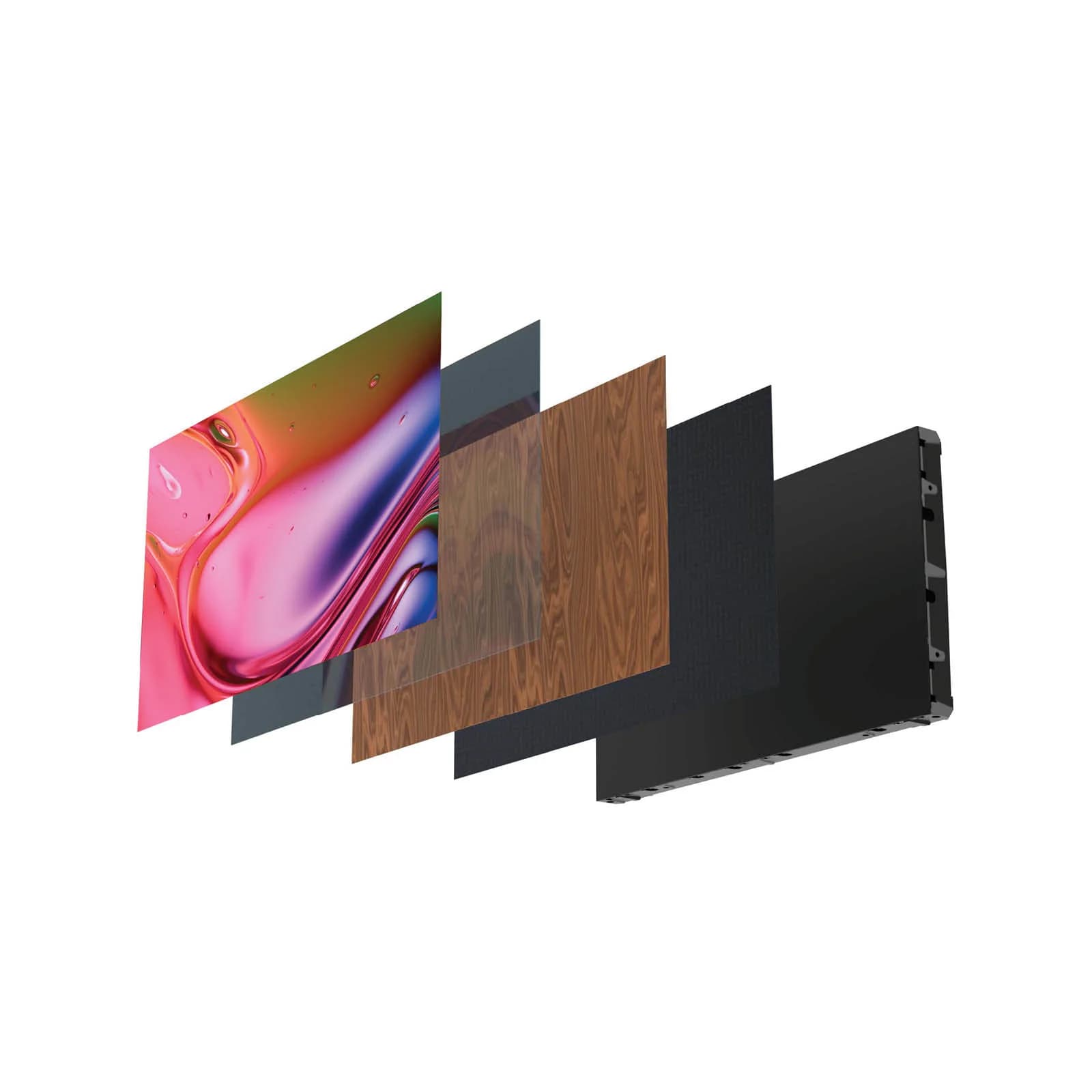
SMD (Surface Mounted Diode) panels, in which red, green, and blue LED chips are mounted separately, are the most common and relatively economical production method in the industry. In COB (Chip on Board) technology, the chips are embedded directly onto the circuit board; since this production process is more complex, the unit cost is higher than that of SMD, but its impact and moisture resistance, as well as its pixel loss rate, are significantly better. In areas with heavy traffic, frequent contact, or where regular maintenance is not possible (airports, subways, building exteriors), although the initial cost of COB is higher, long-term maintenance costs are generally lower than those of SMD.
Indoor or Outdoor: Protection Class Costs
For outdoor displays, additional components such as an IP65 or higher protection rating, UV-resistant coating, and a moisture drainage system to prevent condensation become mandatory; all of these are listed as separate items on the bill of materials. Additionally, outdoor panels require a more powerful power supply to produce much higher brightness (5,000–7,000 nits) compared to indoor panels, which increases both hardware and operational electricity costs. Attempting to cut costs by treating a project as “indoor-like but slightly brighter for outdoor use” may seem like a short-term savings, but it will come back to haunt you in the form of panel failures after just a few summers.
Installation and Engineering: The Often-Overlooked Factor
Most companies requesting quotes compare only the panel prices, but—especially for installations on building facades or at heights—static load calculations, steel structure fabrication, crane/scaffolding labor, and electrical infrastructure can account for a significant portion of the total budget. The engineering costs for an indoor screen mounted on a ready-made wall at ground level cannot be compared to those for an outdoor screen suspended from a building facade. For this reason, the majority of quotes provided without an on-site survey must be revised during the installation phase.
Content Management System (CMS) License
Another often-overlooked expense, alongside hardware, is the software that manages the screens. While some brands offer CMS software free with the hardware, enterprise-scale platforms (such as Samsung MagicInfo) may charge an annual license fee for features like multi-screen management, scheduled broadcasts, and remote monitoring. For a simple, single-screen setup, this difference may be negligible, but in an enterprise project managing dozens of screens from a single central location, the licensing cost can reach a level that rivals the hardware budget.
Warranty Coverage and Spare Parts Policy
Two quotes may list the same panel brand and the same pixel pitch, yet one might be significantly cheaper than the other. The key questions to ask at this point are: How many years is the warranty valid for? What types of malfunctions does it cover? Is there a local inventory of replacement modules? Replacing a faulty module can take days if you have to wait for parts from abroad; if there is local stock, the issue can be resolved the same day. Sometimes, part of the lower price comes from a reduced warranty coverage or slower post-sales support.
Come Prepared for the Right Quote
To receive a clear and comparable quote, clarifying the following information upfront will make your job easier: the dimensions of the area where the screen will be installed, the minimum viewing distance, whether it’s for indoor or outdoor use, how many hours per day the screen will operate, and from how many different locations content will be managed. A quote prepared with this information will greatly reduce the likelihood of encountering surprises later on, such as “oh, I didn’t realize that was included.”
Get a Custom Price Quote
At Koz Teknoloji, we do not publish a fixed price list because the variables listed above create a different equation for every project. Instead, we assess your project on-site and prepare a clear and realistic quote for an LED screen solution tailored to your needs. Please provide us with your screen’s dimensions and intended use, and our engineering team will evaluate the best combination for you.