
Video Walls in Hospitals: Control Room and Central Monitoring Screens
We outline the requirements for video wall systems used in control rooms and central monitoring units at hospitals and healthcare facilities.
A Need Beyond the Patient Information Display: The Technical Monitoring Center
When people think of screens in hospitals, the first thing that comes to mind is patient wayfinding or information displays in waiting areas. We covered that aspect separately in our article on digital signage in the healthcare sector. Here, our focus is on the behind-the-scenes side of healthcare facilities: control rooms where technical infrastructure, security, and building management systems are monitored. The video walls in these rooms do not serve the same purpose as the screens facing patients; they address a different engineering challenge.
What Data Is Monitored Together in a Control Room?
In a typical hospital monitoring center, data from the security camera system, fire detection panels, HVAC status, generator and uninterruptible power supply (UPS) indicators, access control system, and environmental conditions in critical areas (operating rooms, intensive care units, laboratories) are all consolidated on a single wall. Since this data comes from systems by different manufacturers, it must be clarified at the start of the project what format each source outputs and through which interface; the most time-consuming part of the installation is generally not the screens themselves, but the integration of these sources.
From Code Blue to Fire Evacuation: Scenario-Based Screen Management
Emergencies in a hospital are handled according to defined protocols, and the control room screen is expected to follow these protocols. During a Code Blue call, the camera feed from the relevant floor and the elevator status take center stage, while a fire detection signal can bring evacuation routes and the status of fire doors to the center of the wall. These transitions must be handled through predefined scenarios, not by the operator manually rearranging windows. We have detailed the technical aspects of scenario management and multi-window modes in our guide to professional video wall systems.
When Patient Data Appears on Screen: The Privacy Layer
The issue of processing personal health data arises the moment bed occupancy rates or operating room status are displayed on the control room wall. This is a constraint not typically encountered in a classic video wall project. In practice, two measures are taken: the display on the wall uses anonymized identifiers—such as bed or room codes—instead of patient names, and the control room itself is positioned as a restricted area in terms of camera view and visitor access. The technical team should not decide alone which data appears on the wall; this decision must be made in collaboration with the institution’s data controller.
Seconds Until the Generator Kicks In
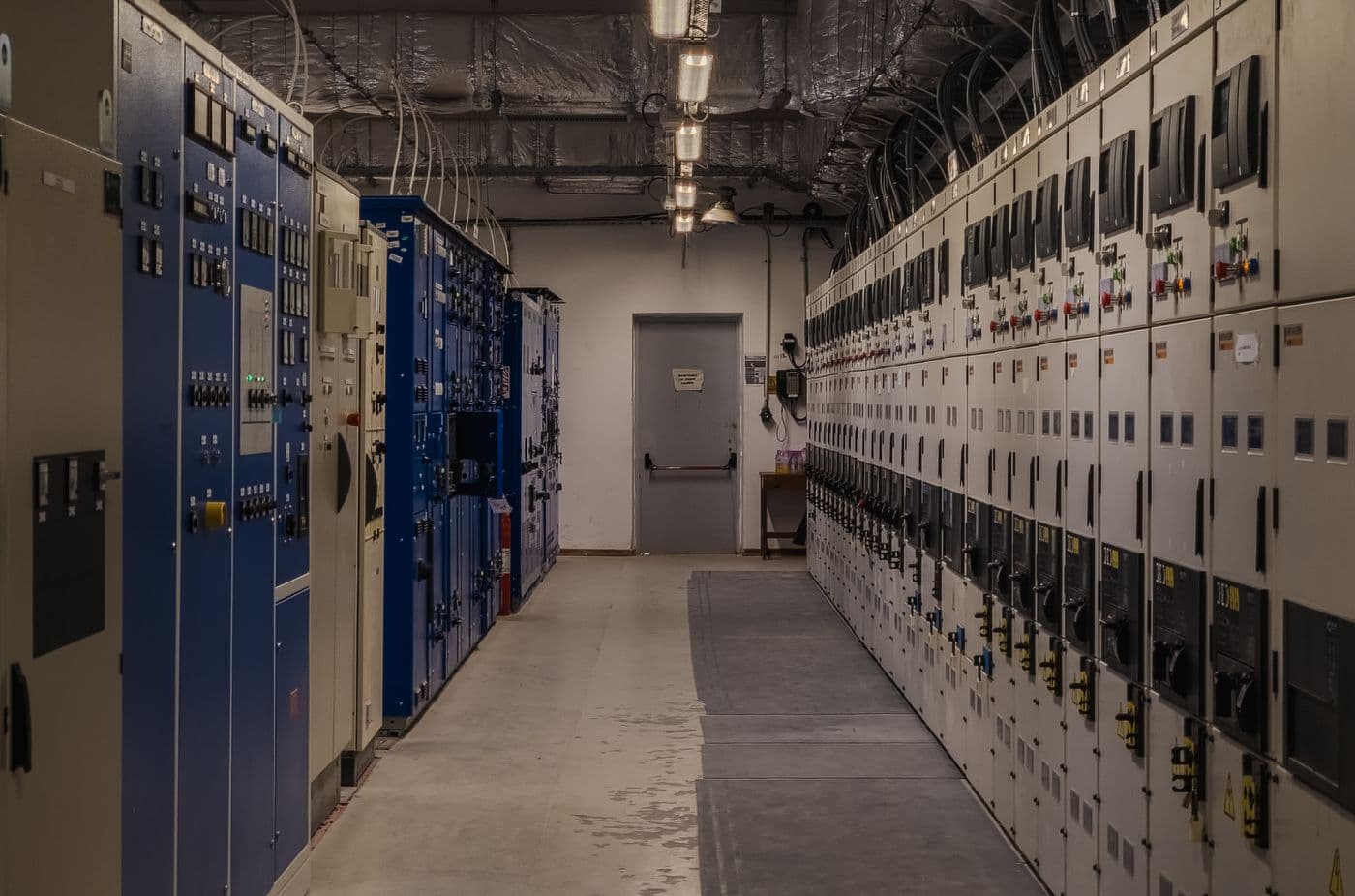
A power outage scenario in a hospital differs from those in other sectors: when the grid goes down, there is a brief gap before the generator kicks in, and if the monitoring system shuts down during this gap, it creates a blind spot precisely when it is needed most. For this reason, control room screens and controller hardware are connected to the hospital’s critical load panel and powered by an uninterruptible power supply until the generator kicks in. If this configuration is not planned in conjunction with the electrical design at the start of the project, retrofitting the wiring later becomes costly.
Integration with the Hospital Information Management System
In some projects, the video wall displays not only camera feeds and technical infrastructure but also operational data from the hospital information management system (HIMS): bed occupancy, operating room turnaround times, and emergency department wait times. These integrations are generally not set up using a ready-made interface but rather through a data service provided by the HIMS vendor. Therefore, the first question to ask during the feasibility phase should not be “How many screens?” but rather, “Can the HIMS export this data?”
For Your Healthcare Facility’s Control Room
In hospital control room projects, selecting screens is the easiest part; the key factors are which systems will serve as data sources and how they will be integrated with the electrical infrastructure. We can work together to take inventory of your existing systems and assess which data can be displayed on the video wall. You can browse our video wall solutions and contact us for support during the technical specifications phase.