What Is a Digital Menu Board? A Guide to Choosing Displays for Restaurants and Cafes
As you transition from a printed menu to a digital menu board, we’ll explain what you need to consider in terms of screen size, orientation, brightness, and content management, using real product data.
What Is a Digital Menu Board?
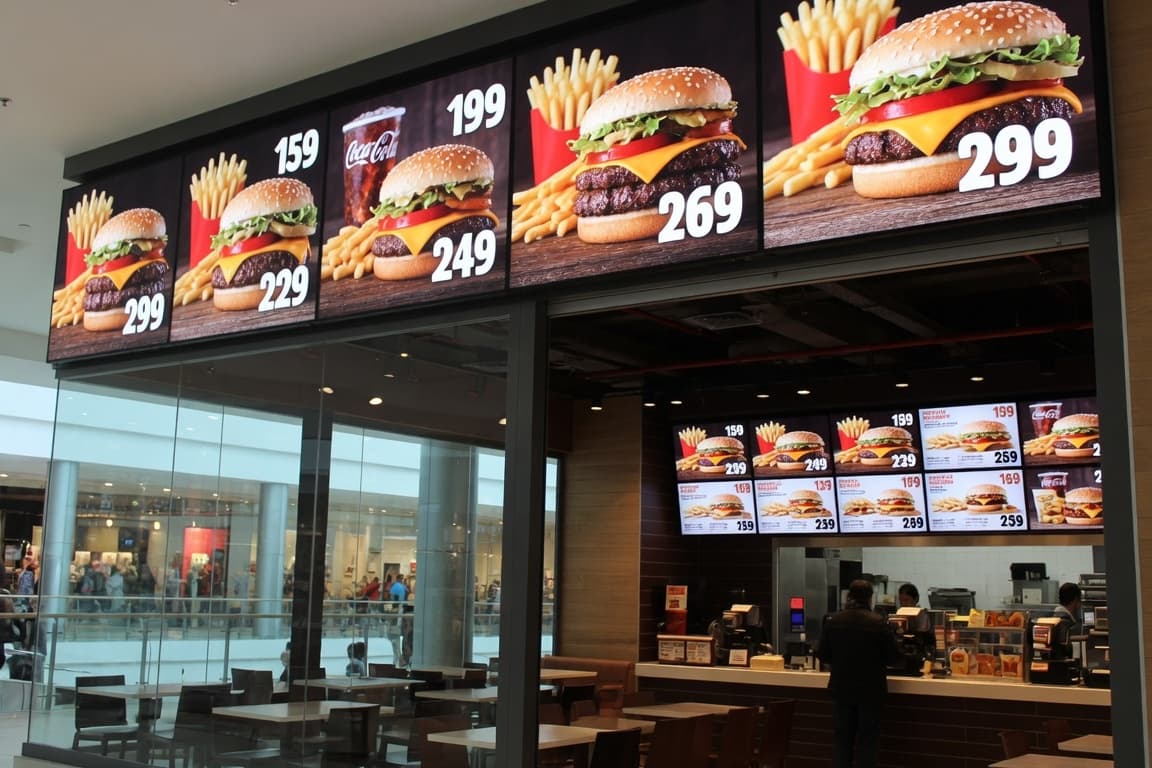
A digital menu board is a digital signage application used in restaurants, cafes, and fast-food establishments that replaces printed menu boards and allows content to be managed via a screen. While a physical sign must be reprinted every time there is a price or product change, the content on a digital menu board can be updated remotely in just a few minutes. This is particularly beneficial for businesses that run frequent promotions or change their menus seasonally.
The Flexibility of Switching from Printed to Digital Menus
Making in-day price or product changes on a printed menu board is impractical; switching from the breakfast menu to the lunch menu, removing a sold-out item from the list, or announcing a last-minute promotion can take hours. On a digital menu board, these changes can be made instantly via content management software; for businesses with multiple locations, the same update can be sent to all locations at once.
Screen Size and Placement: Countertop or Wall-Mounted?
For menu boards placed behind the register or on top of the order counter, a 32- to 43-inch screen size is generally sufficient depending on the venue’s dimensions; for larger or multi-category menus, 50 inches or larger may be preferred. For example, a 32-inch, Full HD signage display like the iiyama ProLite LH3260HS-B1AG clearly displays the menu in compact checkout areas while remaining small enough not to overwhelm the space.
Landscape or Portrait: Orientation Based on Menu Content
For menus with few categories and a strong visual focus, a horizontal (landscape) orientation is more readable; whereas for menus listed in long columns (such as coffee varieties or dessert lists), a vertical (portrait) orientation is more efficient. Since most current signage displays on the market support both orientations with the same hardware, there’s no need to replace the screen even if the venue changes or the menu structure is updated.
Brightness and Image Quality: Food Photography Presents a Unique Challenge
Since the visuals displayed on menu boards are mostly food or beverage photos, color accuracy becomes more critical than in other signage applications. Product photos may appear washed-out on a panel with low contrast or color shift, which can indirectly influence ordering decisions. In areas with controlled indoor lighting, such as the checkout counter, a high contrast ratio and accurate color calibration are prioritized over high brightness.
Uninterrupted Operation and Signal Reliability
A menu board is a display that must operate continuously as long as the business is open. Therefore, it is important to select a certified panel suitable for 24/7 operation; some digital signage displays also feature “Signal FailOver,” which automatically switches to a backup input or local media stream if the main signal is interrupted. This prevents the screen from displaying a black or blank image in the event of a connection issue.
Content Management: How Long Should a Menu Update Take?
The true value of a menu board comes not so much from the hardware as from the content management software. On Android-based digital signage screens, content can be scheduled directly through the manufacturer’s software; scenarios such as time-based automatic menu changes (breakfast–lunch–dinner) or simultaneous broadcasting to multiple locations eliminate the need for staff to intervene manually every day. As the business grows, this centralized management feature becomes far more valuable than dealing with individual screens.
Connectivity and Installation Infrastructure
In counter-top installations, planning power and network connections in advance prevents visible cable clutter later on. With VESA-compatible wall/arm mounts, the screen can be secured without compromising the counter’s aesthetics; screens connected to the network via RJ45 can automatically receive content updates over a wireless or wired network.
Menu Board Solutions for Your Business
If you’re considering switching from printed menus to digital menu boards in your restaurant, café, or fast-food establishment, we’ll assess your space’s dimensions and menu structure to recommend the screen and content management solution that best suits your needs. You can explore our digital menu board solutions or contact us.